
Skip to content
Grade 6 SEL Curriculum for Schools | Foundations Program
School: Grade 6 SEL Curriculum

Habits: Focus, Learning & Teamwork

A research-backed, Tier 1 program that builds the executive function, learning habits, and collaboration skills students need for academic engagement and successful transition into middle grades.
Student Walking with Overlays

Grade 6 SEL Curriculum That Builds Focus, Learning Habits, and Teamwork

A research-backed, Tier 1 program designed to strengthen attention, self-management, learning behaviors, and collaboration as academic demands increase in middle school.

Grade Level
6
Age Range
~10–11
Program Length
7 courses 28 weeks
Delivery
Advisory, SEL Block, Core Period, Enrichment, or After-School
MTSS Tier
Tier 1 (Universal)

Why Grade 6 Matters

Grade 6 marks a major academic and organizational shift.

Students are:

  • adjusting to multiple teachers and classroom transitions
  • expected to manage increased workload complexity
  • navigating longer assignments and multi-step tasks
  • participating more frequently in group projects and labs
  • required to plan, organize, and self-manage with less scaffolding

Research consistently shows that executive function, learning behaviors, and collaboration skills at this stage predict:

  • academic performance in math and reading
  • homework completion and task initiation
  • classroom participation
  • smoother transition into middle grades
Grade 6 is where learning habits must be taught — not assumed.

Program Overview

Core Developmental Question:

How do I learn well and work with others?

The Grade 6 Habits Program intentionally develops:

attention control and executive function
impulse control and behavioral regulation
goal-setting and planning skills
self-discipline and follow-through
learning motivation and adaptive strategies
teamwork and collaborative functioning
This year establishes the learning behaviors and self-management skills that predict success across Grades 7–12.

Grade 6 Course Lineup (28-Week Sequence)

Focused You: Manage Your Mind & Energy

Attention, focus, and cognitive control

Mastering Impulse Control

Behavioral regulation and self-management

Learning to Love Learning!

Motivation, curiosity, and learning strategies

Goal-Setting: Gaining Tools for Success

Planning, progress monitoring, and follow-through

The Art of Self-Discipline

Effort, routines, and delayed gratification

Understanding Why Teamwork Matters

Collaboration, cooperation, and group functioning

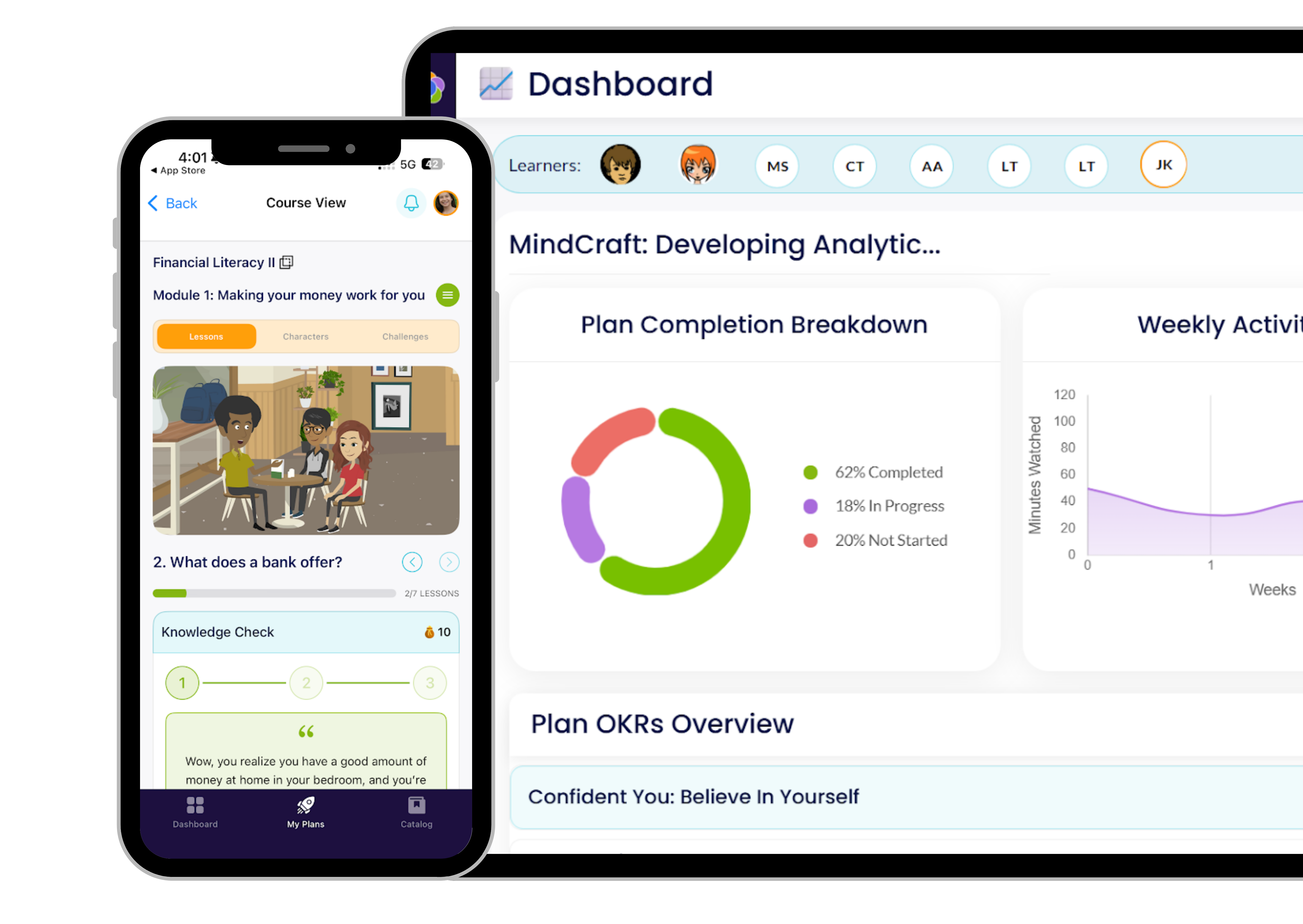
MindCraft: Developing Analytical Skills

Reasoning, problem-solving, and critical thinking

Each course builds on the last — reinforcing habits longitudinally rather than treating learning skills as isolated lessons.

What Students Learn by the End of Grade 6

Students develop the ability to:

sustain attention during academic tasks
manage impulses and behavioral responses
plan, organize, and complete multi-step work
follow through on goals and responsibilities
persist during challenging learning tasks
collaborate effectively in group settings
apply structured and analytical thinking
monitor and adjust their behavior to meet expectations across settings
These are learning behaviors districts care about — not abstract traits.

Academic Impact: How This Supports Learning

Grade 6 Habits improves academic outcomes through four validated pathways:

1

Executive Function → Academic Achievement

Improves attention, inhibition, working memory, and cognitive flexibility — predictors of math, reading, and test performance.

2

Learning Behaviors → Engagement & Performance

Stronger habits increase homework completion, task initiation, persistence, and participation.

3

Teamwork → Instructional Efficiency

Improved collaboration reduces conflict during group work and increases effective instructional time.

4

Motivation → Academic Persistence

Adaptive learning strategies reduce avoidance and support resilience during challenge.

“SEL programs improve academic outcomes by 11 percentile points.” — Durlak et al., 2011

Research & Standards Alignment

Grade 6 Habits aligns with all major district frameworks, enabling easy approval and board justification.

Framework Alignment Includes:

CASEL Five Core Competencies
Executive Function & Metacognition
Portrait of a Graduate
College & Career Readiness (CCR)
MTSS Tier 1
ASCA Mindsets & Behaviors
Whole School, Whole Child (WSCC)
Employability & CTE Soft Skills

Implementation Made Easy

Designed for real school schedules and staffing realities.

  • Two 10–20 min sessions weekly
  • Or one 30–45 min session weekly
  • 30–45 mins total per week
  • No clinical language
  • No diagnostics or therapy
  • No additional staff or certifications required

Can be delivered by:

  • classroom teachers
  • advisory or homeroom staff
  • counselors
  • enrichment or after-school leads

Fits seamlessly into:

  • Advisory / Homeroom
  • SEL Block
  • Enrichment
  • Core Period
  • After-School
  • Summer Bridge

Assessment Without Burden

Grade 6 uses authentic, non-punitive indicators:

  • participation and engagement
  • demonstration of learning strategies
  • goal-setting and planning artifacts
  • collaboration and follow-through behaviors

No grades.

No clinical screening.

No student labeling.

This preserves MTSS Tier 1 status while still providing progress visibility.

School & District Outcomes

Districts implement Bloomster across Grades 5–8, with Grade 6 strengthening:

Student Outcomes

  • improved focus and self-management
  • stronger learning habits and motivation
  • increased task completion and persistence
  • improved collaboration and teamwork
  • higher academic confidence

School Outcomes

  • increased instructional time
  • reduced off-task behavior
  • smoother middle-grade transitions
  • stronger classroom climate
Often summarized as:
“Students who can focus, plan, persist, and collaborate.”

Funding & Allowability

Grade 6 Habits is grant-ready and procurement-safe.

Common Funding Sources:

ESSA Title I
ESSA Title IV-A (Strongest Match)
ESSA Title IV-B (21st Century)
State SEL / Climate Funds
MTSS Tier 1 Behavioral Funds
PTA / Foundation / Local Funds
Bloomster is non-clinical, avoiding mental health compliance barriers.

Why Districts Choose Bloomster (Grades 5–8)

Districts adopt Bloomster as a cohesive, multi-year Grades 5–8 life-skills curriculum, not isolated grade-level programs.

They choose Bloomster because it is:

Research-backed and developmentally sequenced

Skills build intentionally from Grade 5 through Grade 8, aligning with academic and developmental demands.

Designed for real classrooms and real schedules

Flexible delivery models without staffing changes.

Easy to justify to boards and stakeholders

Clear alignment to CASEL, MTSS Tier 1, Executive Function, Portrait of a Graduate, and CCR frameworks.

District-scalable and implementation-ready

One platform, consistent language, consistent outcomes.

Preventative, not reactive

Builds learning habits early to reduce disengagement and academic struggle.

Focused on learning behaviors that matter

Focus, planning, discipline, collaboration, and analytical thinking.

Grade 6 is where learning habits solidify.

Bloomster ensures the entire Grades 5–8 progression is built intentionally.

See If Bloomster Is the Right Fit for Your District (Grades 5–8)

Our team will walk you through:

  • the full Grades 5–8 developmental sequence
  • how Bloomster aligns to your district priorities and frameworks
  • implementation models across upper elementary and middle school
  • funding pathways and procurement alignment
  • what district-wide adoption looks like in practice