


Research-Backed Approach
Executive function research links focus and energy management to improved academic follow-through, reduced distraction, and stronger task completion in middle school learners.


Bloomster helps busy moms support their tween’s emotional growth with short, structured life-skills learning that fits real schedules.
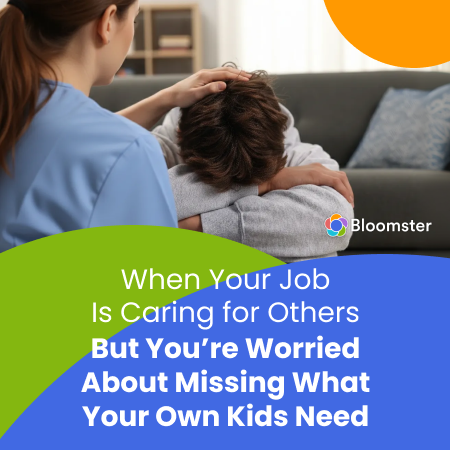
For many nurses, life runs in shifts.
Early mornings.
Late nights.
12-hour days that turn into 14.
And in between… you’re still a parent.
A Story From a Mom in Texas
She’s a registered nurse working rotating shifts — some weekdays, some weekends.
She has two kids:
• A 10-year-old daughter
• A 13-year-old son
Both right in the tween stage.
And if you asked her a year ago, she would have said:
“My kids are good kids. Smart. Kind. No major issues.”
But slowly… things started feeling different.
Not bad.
Not alarming.
Just… different.
The Changes She Started Noticing
Her daughter started second-guessing herself more.
Her son stopped sharing as much about school.
Small things turned into bigger emotional reactions.
Friend situations felt more intense.
Nothing was “wrong.”
But Maria started feeling something many busy parents feel — especially in demanding careers:
“Am I missing something important while I’m taking care of everyone else?”
The Reality Many Healthcare Parents Face
When you work in healthcare, you’re trained to respond to problems.
But emotional growth in kids doesn’t show up like a chart or lab result.
It shows up quietly:
• Confidence dips
• Friendship stress
• Big emotions with small triggers
• Pulling away instead of opening up
And when your schedule is already packed…
You don’t need more guilt.
You need something realistic.
The Moment That Changed Things
During a shift, another nurse mentioned something she was using with her tween at home for helping with Social and Emotional learning
Not therapy.
Not tutoring.
Not another app kids scroll alone.
Something structured.
Something short.
Something consistent.
That was the first time Maria heard about Bloomster.
Bloomster is designed to support the structured development of emotional and social skills.
It is designed specifically for tweens (ages 9–14) and their parents.
Built by:
Child development specialists
Psychologists
SEL educators
A Thoughtful First Step Many Families Take
The course-fit quiz helps highlight skill areas — before starting anything structured.
See Where Your Child May Benefit Most
(No pressure. Just clarity.)
Why Bloomster Made Sense for Her Life
What stood out wasn’t “fixing problems.”
It was structure.
Short 10–15 minute sessions.
Clear parent guidance.
Real-life emotional skill building.
Something she could do even on busy weeks.
No pressure to be perfect.
No feeling behind.
Just consistent small progress.
What She Noticed Over Time
Not overnight change.
But small shifts:
More open conversations.
Less shutdown during hard moments.
More confidence in small social situations.
And maybe most importantly —
She felt like she was supporting her kids before problems became bigger ones.
What Bloomster Is (And Isn’t)
Bloomster IS:
✔ Structured emotional skill learning
✔ Built for real families
✔ Designed for tweens + parents together
Bloomster IS NOT:
✘ Therapy
✘ Diagnosis
✘ A quick fix
✘ A replacement for parenting
Where Most Parents Start
Not with lessons.
With clarity.
That’s why many families start with the Course Fit Quiz To understand where their child may benefit most.
A Simple First Step
See Where Your Child May Benefit Most
No pressure.
No rush.
Just a thoughtful place to start.