
The tween years are quieter than parents expect.
There’s no sudden switch.
No single moment where everything changes.
Between ages 9 and 14, kids are still growing academically—but something else is happening at the same time.
Their emotional world gets more complex.
Social dynamics start to matter more.
Self-awareness begins to take shape.
Kids start noticing how they come across to others.
They compare themselves more.
They feel things deeply—but don’t always have words for it yet.
This is also when learning changes.
Not the kind measured by grades—but the kind that shows up in everyday moments:
- how they respond to frustration
- how they handle disagreement
- how comfortable they feel speaking up
- how they process disappointment or pressure
Most of this growth happens quietly, under the surface.
And because it’s gradual, it’s easy to miss.
Most parents don’t wake up thinking, “My child needs social and emotional learning.”
What they notice instead are small, quiet signs:
- Their child doubts themselves more than before
- Emotions escalate faster and linger longer
- Friendships feel harder to navigate
- Focus comes and goes
· Conversations shut down instead of opening up
None of this means something is “wrong.”
For many families, it’s simply what the tween years look like—when kids are growing fast emotionally but don’t yet have the tools to understand what’s happening inside them.
And for parents, it often raises a harder question:
Am I saying the right thing?
Should I be doing more?
Is this just a phase—or something they need help with?
Why This Stage Matters More Than It Seems
What’s happening during the tween years isn’t just emotional—it’s developmental.
This is when kids begin forming:
- emotional habits
- coping patterns
- beliefs about themselves
- ways of relating to others
These aren’t lessons kids pick up automatically.
They’re learned over time—through guidance, practice, and reflection.
And while many parents care deeply about helping their child grow emotionally, few are ever shown how to teach these skills in a structured, steady way.
So most families do what feels natural:
- They wait.
- They hope maturity fills the gaps.
- They step in only when things feel hard.
Sometimes that’s enough.
Sometimes, it leaves kids figuring things out on their own.
A Quiet Question Many Parents Carry
Somewhere in the middle of all this, many parents find themselves wondering:
What if emotional growth deserves the same attention as academics—before problems show up, not after?
That question doesn’t come from fear.
It comes from care.
And it’s where this story really begins.
Why Social & Emotional Learning (SEL) Matters
Academic skills matter.
But they don’t teach kids how to:
- calm themselves when emotions run high
- speak up with confidence
- handle conflict without shutting down
- stay focused when things feel overwhelming
- make thoughtful choices under pressure
Those skills are learned—not automatically, and not all at once.
They’re built the same way other important skills are built:
through guidance, repetition, and real-life practice.
That’s what Social and Emotional Learning is about.
- Not therapy.
- Not labels.
- Not fixing a child.
Just helping kids understand themselves and navigate the world with more confidence and calm.
What makes this tricky is that most parents already value emotional growth.
They just don’t have:
- a clear way to teach it
- a shared language with their child
- a structure that fits into daily life
So they do what most of us do:
- talk it through when issues come up
- give advice when emotions spike
- hope maturity fills the gaps over time
Sometimes that works.
Often, it doesn’t.
And that’s not because parents aren’t trying.
It’s because emotional skills aren’t automatic—they’re learned.
What We Learned From Parents Like You
When thousands of parents engaged with our content (social media, website, and other external content) and shared what they were seeing at home, patterns started to emerge.
Parents described:
- kids who shut down instead of opening up
- emotions that escalated quickly
- confidence that seemed fragile
- focus that came and went
- social situations that felt stressful
What stood out wasn’t panic.
It was uncertainty.
Parents cared deeply—but didn’t know what the right next step looked like.
They weren’t looking for a lecture.
They weren’t looking for a quick trick.
They were looking for guidance they could trust.
Parents were deeply interested in helping their child:
- build confidence
- manage emotions
- handle friendships
- stay focused
- feel more grounded
But many paused when it came time to start learning.
Not because they didn’t care—but because:
- they were busy
- their child wasn’t with them at that moment
- they hoped for a quick takeaway
- they weren’t sure what starting would really involve
That pause told us something meaningful.
They were looking for clarity, reassurance, and a thoughtful place to begin.
How Bloomster Came to Life
That gap is exactly why Bloomster was created.
Bloomster is a structured Social and Emotional Learning platform designed specifically for
tweens (ages 9–14) and the parents supporting them.
It was built by:
- child development specialists
- psychologists
- educators with deep experience in SEL
Not as an app kids scroll through alone—but as a learning system families use together.
It includes:
- Short, animated lessons built around real-life situations
- Clear guidance for parents—no guesswork
- Reflection prompts that help kids think and apply what they learn
- Progress insights so parents can see growth beyond daily behavior
Lessons are designed to fit into real family life—often 10–15 minutes at a time.
And importantly:
Bloomster isn’t something kids do alone.
It’s something families grow through together.
What Bloomster Is (and Isn’t)
Bloomster is:
- Structured and research-informed
- Focused on skill-building, not entertainment
- Designed for long-term growth
- Strengthens the parent’s role in guiding emotional growth.
Bloomster is not:
- A mental health service
- A one-day solution
- A motivational video library
- A shortcut around parenting
Growth takes time—and Bloomster respects that.
What Parents Often Tell Us They’re Facing
From quiz responses and conversations, parents often share challenges like:
- Emotional outbursts that feel hard to manage
- Anxiety or overwhelm showing up more often
- Low confidence or hesitation to try new things
- Trouble focusing or following through
- Social struggles with peers or siblings
Bloomster doesn’t promise to erase these overnight.
Instead, it helps kids learn tools they can practice—again and again—until those skills start showing up naturally in daily life.
What Happens When Families Stick With Bloomster
Over time, many parents notice:
- Calmer reactions during stressful moments
- More open conversations
- Growing confidence
- Better emotional awareness
- Stronger parent-child connection
Not because kids changed overnight—but because they learned how to understand themselves.
Bloomster is for parents who:
- care deeply about emotional growth
- value long-term development
- want guidance, not guesswork
- are ready to support learning over time
It may not be the right fit if you’re looking for a single answer or instant change.
And that’s okay.
If you’re still here, it likely means you’re thinking carefully about what your child needs—not just now, but long term.
The next step isn’t jumping into lessons right away.
It’s understanding where your child might benefit most.
That’s why many families begin with taking a course-fit quiz—to help guide the learning path before starting.
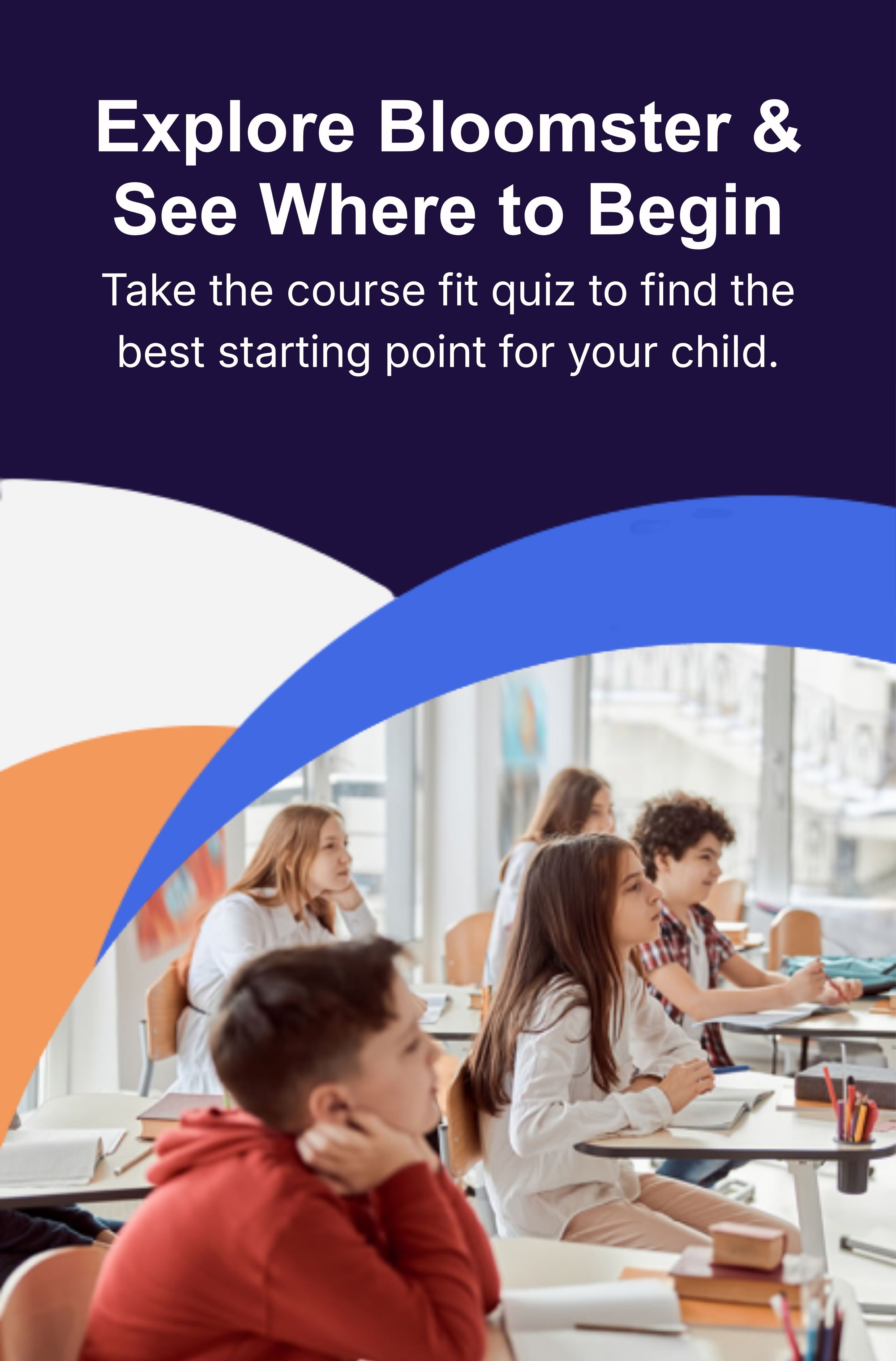
Explore Bloomster & See Where to Begin
There’s no rush.
No pressure.
Just a thoughtful place to start—when you’re ready.