Why Your Tween Caves to Peer Pressure — And What Actually Helps Them Hold Their Ground
TL;DR:
"Just say no" doesn't work because it ignores what's actually happening in your tween's brain. The answer isn't more rules or better arguments — it's a stronger inner reference point. And that's something you can build.
He Knew What He Valued. And Then His Friends Showed Up.
You've had the conversations. You know he knows what he believes.
And then he came home having done the exact opposite. And when you asked why, he said I don't know — and you believe him. That's what makes it so hard to know what to do next.
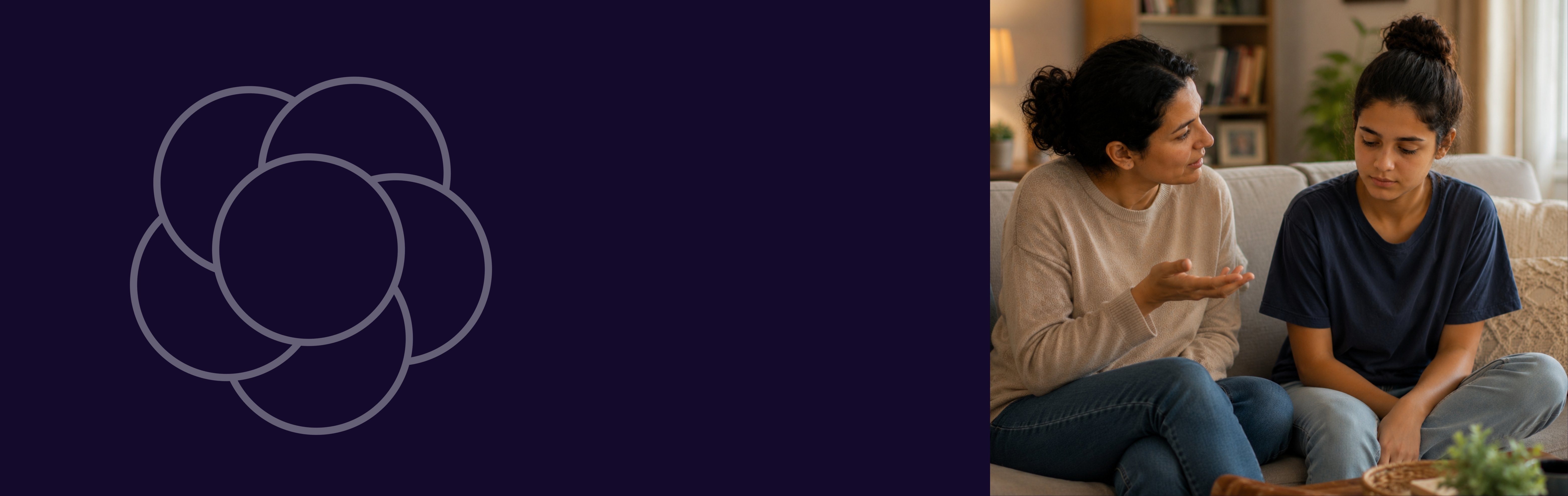
This is one of the most quietly disorienting moments in parenting a tween: watching a child who clearly has values seem to misplace them the second his friends are in the room. It can feel like the conversations didn't land, or like his identity is still too fragile to hold under social pressure.
Neither of those things is quite right. What's actually happening is more specific — and more workable — than it looks.
Why Peer Pressure Feels Like a Fact
Here's what most parents don't realize: to a tween's brain, a friend's opinion doesn't just feel persuasive. It feels true.
Child development research consistently shows that in the 9–14 age range, the social parts of the brain are running at full intensity while the self-referencing parts — the ones that ask but what do I actually think? — are still developing. So when everyone around your tween seems to feel one way about something, that signal registers not as peer pressure but as reality. Going against it doesn't feel like independence. It feels like being wrong.
This is why just say no consistently fails. It assumes your tween is choosing peer influence over his own values. But in the moment, he may not have access to his own values at all — they've been temporarily drowned out by the volume of everyone else's.
The answer isn't louder rules. It's a clearer inner signal.
What Actually Strengthens the Inner Reference Point
The inner reference point is the quiet voice that knows what's true for him before the social pressure floods in. It's built — not from lectures about peer pressure, but from conversations that practice accessing it.
Try asking these when nothing is at stake:
"If nobody else had an opinion about this — what would you actually want?"
"What does your gut say before you think about what everyone else thinks?"
These questions do something specific: they train him to locate his own thought first. The more he practices finding it in low-stakes moments, the more available it becomes in high-stakes ones.
And when he does cave — because he will, and that's developmentally normal — the most useful response isn't disappointment or analysis. It's curiosity: "What was going on for you in that moment?" Not to assign fault, but to help him build language for the internal experience, so he can recognize it next time before the decision is already made.
Bloomster's Making Responsible Choices course works through this directly with tweens — including how personal values and peer expectations pull against each other, and how to develop the self-awareness to tell them apart in real time.
Try This Before Next Monday
This week, find one ordinary moment — a minor choice about plans, an opinion about something low-stakes — and ask him: "What do you think, before you think about what everyone else thinks?"
Let him find the answer. Don't fill the silence.
You're not solving peer pressure. You're building the muscle that makes his own voice louder than the noise around him. That's work that shows up in the moments you'll never see — and it starts with the small questions you ask now. 💛
Coming up next week: The specific coaching conversations that build decision-making muscle — and the responses that quietly undo it even when they're well-intentioned.