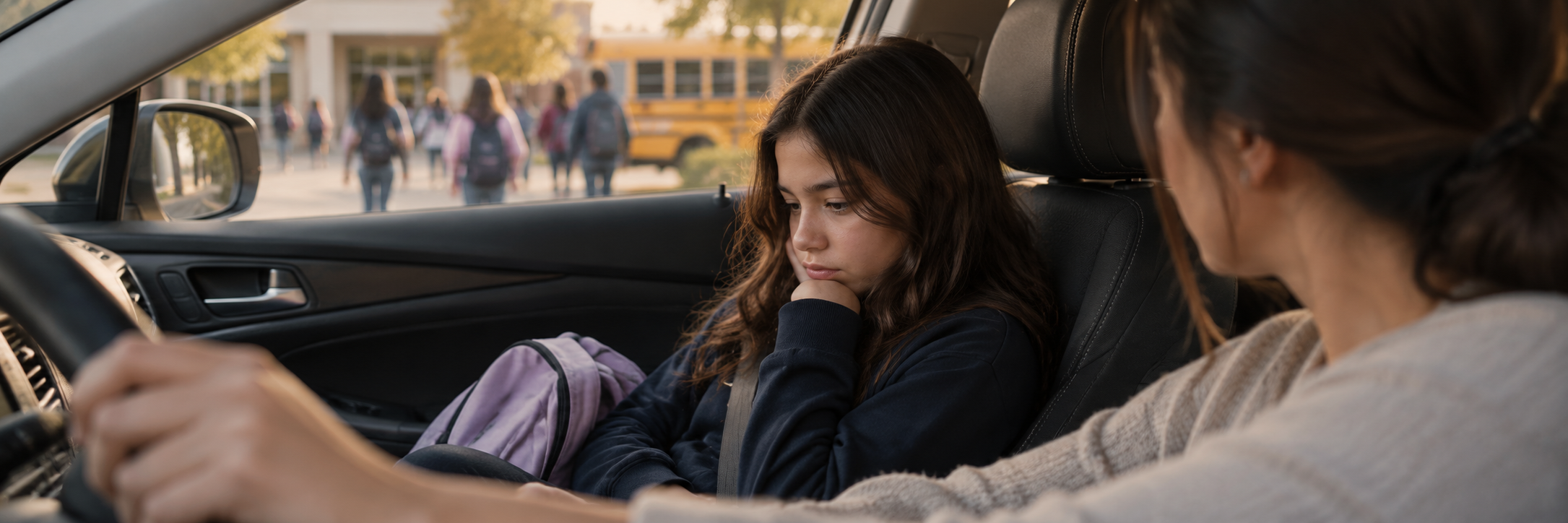
Why Tweens Shut Down After School
If your tween comes home from school and gives you nothing — no details, no eye contact, maybe even some attitude—this is for you.
Short answer: it’s normal.
And more importantly: it’s not your fault.
The After-School Shutdown Isn’t Disrespect
It’s Regulation.
Most tweens spend the entire school day doing things that quietly drain their emotional energy:
- following rules
- navigating social dynamics
- managing noise and stimulation
- performing academically
- masking big feelings
By the time they walk through the door, their brain isn’t ready to talk yet. It’s busy trying to reset.
🧠 What research shows:
Child development and neuroscience research consistently find that regulation comes before communication. A dysregulated brain prioritizes safety and recovery—not conversation, reflection, or explanation.
So when your child shuts down, they’re not being rude.
They’re recharging.
Why Asking Questions Too Soon Backfires
Many parents do this instinctively (and understandably):
- “How was school?”
- “What happened today?”
- “Did you finish your homework?”
But when these questions come too early, they often lead to:
- one-word answers
- irritation
- silence
- withdrawal
Not because your child doesn’t want to talk — but because their brain can’t yet.
The Tiny Shift That Changes Everything
Timing > Pressure
Here’s the reframe that helps most parents immediately:
- Connection gets easier after decompression—not before.
What Actually Helps After School
Try one or two of these before asking anything:
- 10–20 minutes of quiet time
- a snack + no questions
- headphones or alone time
- low-demand presence (“I’m here”)
Think of it like letting your phone recharge before opening apps.
What to Say Instead (Low-Pressure Openers)
When you do speak, keep it light and optional:
- “Want a snack or a few minutes first?”
- “No rush—I’m here when you’re ready.”
- “Talk now or later?”
These simple phrases:
- lower pressure
- increase emotional safety
- make sharing more likely later
Small change. Big payoff.
The Reassurance Parents Need to Hear
If you’ve been worrying:
- “Other kids talk more.”
- “If I don’t ask, I’ll never know what’s going on.”
- “Am I missing something important?”
Here’s the truth:
💛 Many tweens open up later— in the car, at bedtime, while doing something side-by-side.
It often indicates that trust remains intact.
Try This Tonight (One Simple Experiment)
Tonight, try this:
Greet them warmlyOffer space + comfortAsk nothing for 15 minutes
Then notice:
- do they relax more?
- do they share later—without prompting?
You don’t need to force connection.
You just need to make room for it.
A Final Note for Parents
Understanding why your child shuts down is the first step toward helping them open up—without turning every moment into a struggle.
You don’t need to be a therapist.
You don’t need the perfect words.
You just need the right timing.