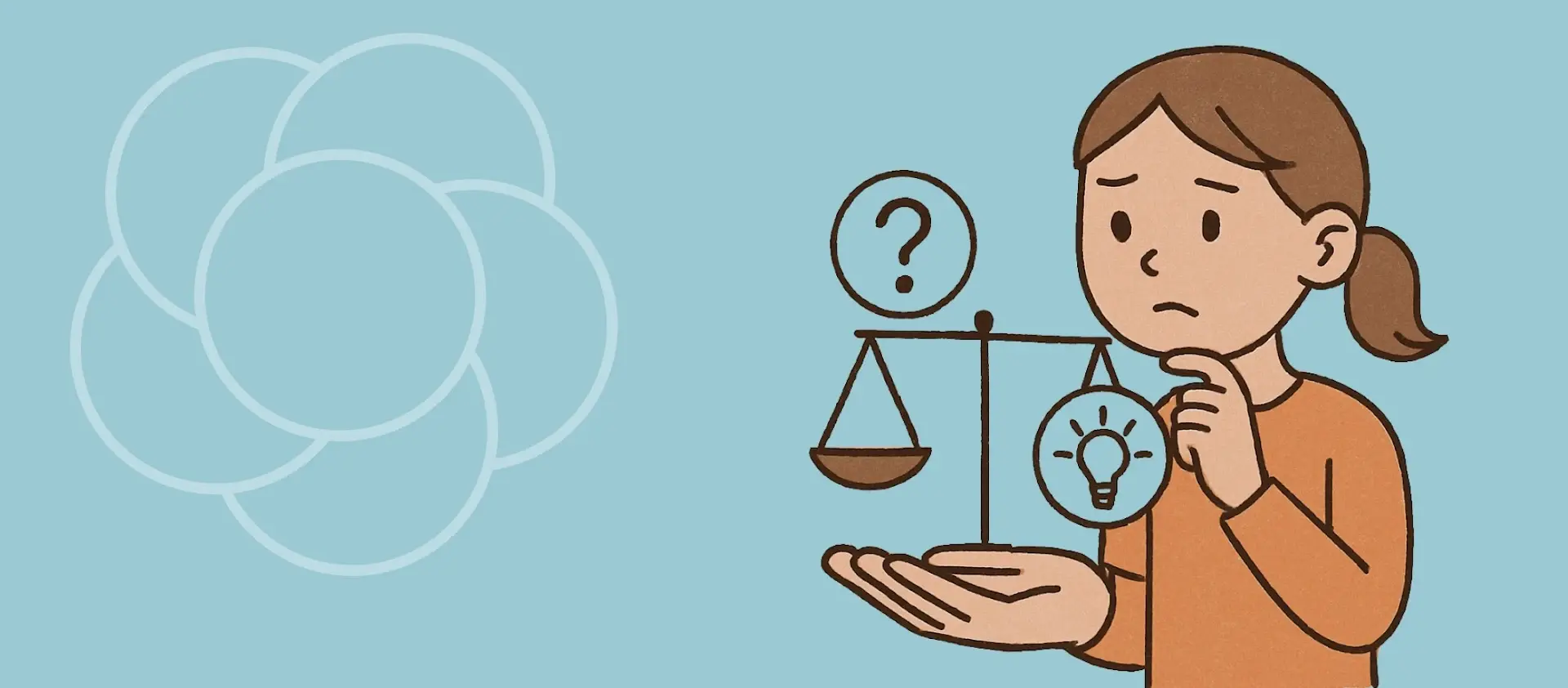
When a Tween Can Actually Think for Themselves — And How You Got Them There
TL;DR:
A tween who can think for themselves doesn't announce it. The signs are quieter than you'd expect — and once you know what to look for, you'll start seeing evidence of progress you didn't realize was already there.
You've Been Doing the Work. But You're Not Sure It's Working.
She still makes choices that confuse you sometimes.
She still goes along with things you wish she wouldn't. She still says I don't know more than you'd like. And some days it genuinely feels like nothing from the last month — or the last year — has landed anywhere useful.
Progress in this particular skill is almost never visible from the outside. It doesn't arrive as a moment where your tween sits down, weighs her options thoughtfully, and makes the responsible choice while you watch. It shows up sideways, in small moments you might not even connect to the work you've been doing.
But those moments are real. And knowing what to look for changes how you see what's already happening.
What Progress Actually Looks Like
Here are five signs that decision-making capacity is genuinely developing — none of them dramatic, all of them meaningful.
She pauses before she answers. Not every time. But more than she used to. That half-second between the social pressure and the response is the reasoning brain starting to show up. It's small. It counts.
She comes back to debrief. When something didn't go the way she wanted, she brings it up later — not because you asked, but because she's processing it. That's her building a mental model of her own choices. It's one of the most important things that can happen at this age.
She pushes back on you — with reasoning. This one surprises parents. A tween who disagrees with a parent's suggestion and can articulate why is demonstrating exactly the skill you've been building. Independent thinking doesn't only point outward. It points at you too, sometimes. That's a feature, not a problem.
She checks in before deciding something she's uncertain about. Not because she needs permission — but because she's learned that thinking out loud with someone helps her find her own answer. That's the coaching relationship working.
She uses the phrase "I think" more than "everyone thinks." Listen for this one. It's subtle. But a tween who has started locating her own opinion before the group's is doing something genuinely different from what she was doing six months ago.
The Daily Conditions That Keep It Growing
Decision-making capacity isn't built in a single conversation and then held permanently. It's maintained through the conditions you create consistently — and most of them are simpler than they sound.
Keep asking what do you think? before offering what you think. Keep holding the pause. Keep responding to bad decisions with curiosity before judgment. Keep noticing the small moments out loud: "I noticed you thought that through before you answered. That's not nothing."
You don't need a new framework for August. You need to keep doing what you've been doing — with the understanding that the results are accumulating even when they're not visible.
Bloomster's Making Responsible Choices course continues this work directly with your tween — building the internal vocabulary for their own decision-making so that what you're reinforcing at home has somewhere solid to land.
Try This Before Next Month
This week, look back at one moment from July where your tween made a decision — any decision — and handled some part of it differently than they would have three months ago.
Name it to them: "I noticed that. That was you thinking for yourself."
Don't over-explain it. Don't turn it into a lesson. Just reflect it back so they can see it too.
That's how the inner voice gets louder — not through pressure, but through being acknowledged often enough that it starts to feel like theirs. 💛