
MindCraft: Developing Analytical Skills
Your Child Hears a Lot Online. Critical Thinking Helps Them Sort It Out.
Help your child question assumptions, notice bias, judge information carefully, and make choices they can explain.

- 4Core Modules
- 32Lessons & Exercises
- 12Developmental Subskills
- 1Learning Program
Why Does Your Child Believe Everything They See?
A viral video, a friend's claim, or a confident influencer can shape what your child thinks. Often it isn't gullibility. Critical thinking takes skills still forming.
 Online Information
If It's Online, It Must Be True
- Confident claims can sound like facts.
- Ads and real news can look the same.
- Checking a source rarely happens.
 Going Along
The Group Decides
- It's easier to agree than to question.
- One loud opinion can sway everyone.
- Different views get left out.
 Jumping to Conclusions
First Thought, Final Answer
- Assumptions fill in what they don't know.
- Personal biases go unnoticed.
- Complex problems get simple answers.
Critical thinking isn't a talent some children have. It's a set of skills that can be learned, practiced, and gradually strengthened.
Why Critical Thinking Matters More as They Grow
As children grow, they meet more information, more opinions, and more decisions on their own. Thinking carefully helps them decide what to believe and do.

More Information, More Choices
- Information is everywhere. Videos, posts, and search results compete for attention, and not all of it is accurate.
- Schoolwork asks why. Projects and discussions reward children who can support ideas with reasons and evidence.
- Group decisions are common. Speaking up when something seems off helps teams avoid going along with a bad idea.
- Ethics enter the picture. More choices involve what's right, not just what's easy or popular.
- Critical thinking isn't being negative. It means staying curious, asking good questions, and being open to changing their mind.
The goal isn't a child who doubts everything. It's one who thinks things through before deciding what to believe.
What MindCraft: Developing Analytical Skills Helps Your Child Develop
Critical thinking isn't one skill. The course breaks it into specific capabilities children can understand, practice, and strengthen over time.
Thinking Things Through
Slow down, examine evidence, and reason carefully before accepting a claim or making a choice.
Asking Powerful Questions
Ask questions that open up a topic and get past surface-level answers.
Weighing What's Right
Use ethical decision-making to consider what's fair and right, not just what works.
Staying Open-Minded
Consider views they disagree with and be willing to change their mind with good reasons.
Noticing Their Own Bias
Recognize personal biases and assumptions, and check them before deciding.
Each capability supports the others: questioning, staying open, and checking their own bias help children make well-reasoned, fair decisions.
Inside the Course — Four Modules, From Foundations to Real-World Thinking
The course introduces critical thinking, builds core skills, enhances them for complex situations, and expands them into communication and emotional intelligence.
- 01
Introduction to Critical Thinking Skills
What critical thinking is and why it matters.
- Understand critical thinking and how it leads to better-reasoned decisions.
- Identify and challenge personal biases and assumptions.
- Evaluate arguments and question the credibility of information.
- Develop open-mindedness toward diverse perspectives.
- 02
Building Critical Thinking Skills
Questions, causes, and hidden assumptions.
- Ask thought-provoking questions that deepen understanding.
- Build skills in inquiry, cause-and-effect analysis, and brainstorming.
- Recognize cognitive biases and hidden assumptions.
- Combine techniques to tackle complex problems.
- 03
Enhancing Critical Thinking Skills!
Groupthink, ethics, and strategy.
- Identify and prevent groupthink so diverse views are heard.
- Apply ethical decision-making frameworks to real situations.
- Plan strategically for long-term goals instead of just reacting.
- Analyze how unusual cases can reveal what the majority misses.
- 04
Expanding Your Skills!
Communication and emotional intelligence.
- Understand how emotional intelligence supports better decisions.
- Explain complex ideas clearly and listen actively.
- Break complex problems into manageable parts.
- Reflect on growth and set goals for future thinking skills.
Course structure
- 4Modules
- 28Instructional Lessons
- 8Practice Activities
 Course badgeMeerkat — The Analyzer
Together, the modules move children from questioning what they hear to reasoning through complex choices with fairness and clarity.
From Learning to Real Life — How Your Child Practices Critical Thinking
Spotting bias in a lesson is easier than noticing it in a viral video. Critical thinking grows through practice, reflection, and real information.
 01Learn
Understand How Thinking Works
- Watch short animated lessons about everyday claims and choices.
- See characters question, analyze, and change their minds.
- Discover tools like cause-and-effect analysis and bias checks.
 02Practice & Reflect
Question and Weigh
- Work through scenario-based Try Its where available.
- Evaluate an argument and look for missing evidence.
- Reflect on their own thinking in module exercises.
 03Apply
Think Critically Beyond the Screen
- Ask "how do we know?" about a claim they saw online.
- Check one more source before sharing something.
- Argue the other side of a family debate.
- Talk with a parent about a time they changed their mind.
Success isn't always being right. It's asking better questions and being willing to change their mind for good reasons.
What Research Tells Us About Critical Thinking, Information & Bias
Researchers have studied whether critical thinking can be taught and how young people judge information. These findings describe general patterns, not guarantees.
- It Can Be Taught
Critical thinking instruction works.
- A review of 341 effects found teaching critical thinking had a positive impact.
- Discussion, real-world problems, and mentoring were especially helpful.
- Results held across ages and subjects.
- Judging Information
Online information is hard to judge.
- Stanford researchers tested how students evaluate online information.
- More than 80% of middle schoolers took a sponsored ad for a real news story.
- The study shows a skill gap, not a lack of intelligence.
- The Bias Blind Spot
We see bias in others more easily.
- Across three studies, people rated themselves as less biased than others.
- They saw bias in others' reasoning but not in their own.
- The participants were adults, which shows how universal this is.
The evidence points to practice: critical thinking can be taught, and everyone benefits from checking their own assumptions. MindCraft: Developing Analytical Skills is built around that approach, without promising guaranteed results.
Why MindCraft: Developing Analytical Skills Is Part of the Habits Program
In the Habits Program, the course comes fifth. It builds on self-discipline and prepares children to think and work well with others.
Why It Comes Fifth
- It builds on self-discipline. After The Art of Self-Discipline, children apply steady effort to reasoning through harder problems.
- It adds careful thinking. Focus, self-control, and curiosity from earlier courses support slowing down to think things through.
- It prepares for teamwork. Avoiding groupthink and listening to others set up Understanding Why Teamwork Matters, the next course.
- It supports fair choices. Ethical reasoning carries into forgiveness and relationships at the end of the program.
The Habits ProgramCourse 5 of 7
- 1–4Four Earlier CoursesFocus · Self-Control · Curiosity · Discipline
- 5This CourseMindCraft: Developing Analytical SkillsAnalytical Thinking
- 6Understanding Why Teamwork MattersCollaboration
- 7Power of ForgivenessForgiveness & Emotional Recovery
The course isn't a standalone fix. It's one step in a longer sequence that gives critical thinking time to develop.
Frequently Asked Questions About MindCraft: Developing Analytical Skills
Practical answers about what your child will learn, what the course asks of your family, and how it fits into Bloomster's programs.
Who is MindCraft: Developing Analytical Skills designed for?
It uses everyday situations relevant to children roughly 9 to 14. It is the fifth course in the Habits Program, which is designed around ages 10–12. What your child is experiencing, like taking online claims at face value, matters more than an exact age.
What will my child learn in this course?
Children learn what critical thinking is, how to question assumptions and evaluate arguments, and how to recognize bias. They practice asking good questions, cause-and-effect analysis, avoiding groupthink, ethical decision-making, and explaining complex ideas clearly.
Will this help my child judge what they see online?
Module 1 covers evaluating arguments and questioning the credibility of information, skills that apply directly to videos and posts. The course isn't a full media literacy program, but it builds the habit of asking how we know something is true.
How long does the course take?
Your child moves at their own pace. The four modules contain 28 short animated lessons, 8 practice activities, and a module exercise at the end of each. Inside the Habits Program, courses are spaced across roughly a year, which gives this one several weeks to settle into daily life.
How much time should my child spend on it each week?
We suggest two 30-minute learning sessions each week. Everyday conversations and things your child sees online give natural chances to practice between sessions. If a week gets missed, simply pick up again.
Do I need to be involved as a parent?
You don't need to teach the course. Protect the learning time, notice what your child is working on, and model curiosity by asking "how do we know?" together and admitting when you've changed your mind. Bloom, the parent side of Bloomster, helps you follow along.
Will this make my child argue with everything?
The aim is thoughtful questioning, not arguing. Children learn to stay open-minded, listen actively, and consider other views fairly. Critical thinking includes respecting others while thinking for yourself.
Is this an academic or test-prep course?
No. MindCraft: Developing Analytical Skills teaches thinking skills for everyday life: evaluating information, recognizing bias, and making fair decisions. These skills can support schoolwork, but the course doesn't teach subjects or test strategies.
Can I enroll my child in this course by itself?
Bloomster is organized around learning journeys rather than single-course purchases. MindCraft: Developing Analytical Skills is part of the Habits Program, and it may also be recommended within a Personalized Course Journey. Finding your start shows where your child might begin.
How will I know whether my child is making progress?
Look for small signs: asking where a claim came from, giving reasons for an opinion, considering another point of view, or noticing their own assumption. Progress is rarely a straight line.
Explore the Habits Program — Where Thinking Skills Lead Next
Critical thinking is one capability among many. The Habits Program connects it with focus, self-control, discipline, and teamwork over a year of learning.
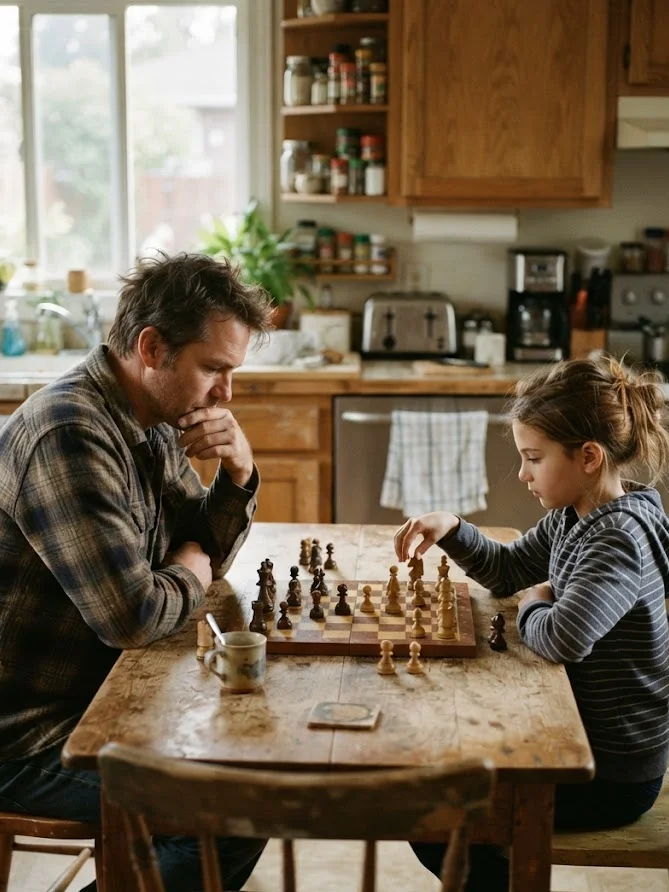
Thinking Skills Grow Alongside Other Skills
- This course builds careful questioning, bias awareness, and well-reasoned decisions.
- Earlier courses develop the focus, self-control, and discipline thinking draws on.
- Later courses apply these skills to teamwork and forgiveness.
- Steady practice across months gives these capabilities time to connect in everyday life.
Explore how the Habits Program sequences its seven courses, and whether it fits what your child needs right now.
 Free PDF · No account neededFree Critical Thinking Guide for ParentsReal-life scenarios and questions to talk through critical thinking with your child at home.
Critical thinking isn't about doubting everything. It's about your child thinking for themselves, carefully and fairly.