
Understanding Why Teamwork Matters
Every Team Needs More Than One Good Player. Your Child Can Learn to Work With Others.
Help your child listen, take on a role, handle disagreements, and plan projects a whole team can be proud of.
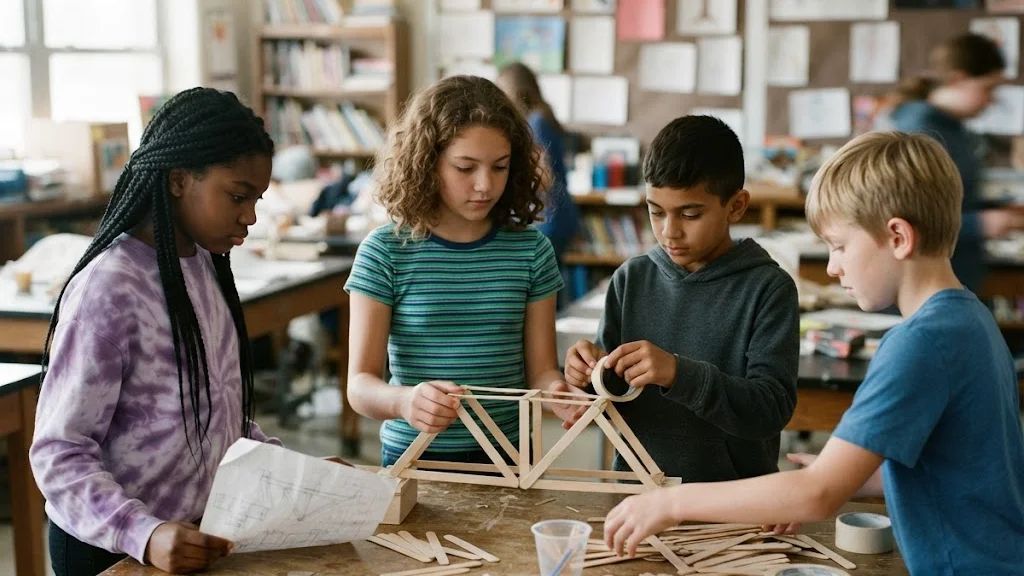
- 4Core Modules
- 32Lessons & Exercises
- 12Developmental Subskills
- 2Learning Programs
Why Does Working in a Group Feel So Hard for Your Child?
One child does all the work, nobody agrees, or the quiet ones disappear. Often it isn't attitude. Teamwork takes skills still developing.
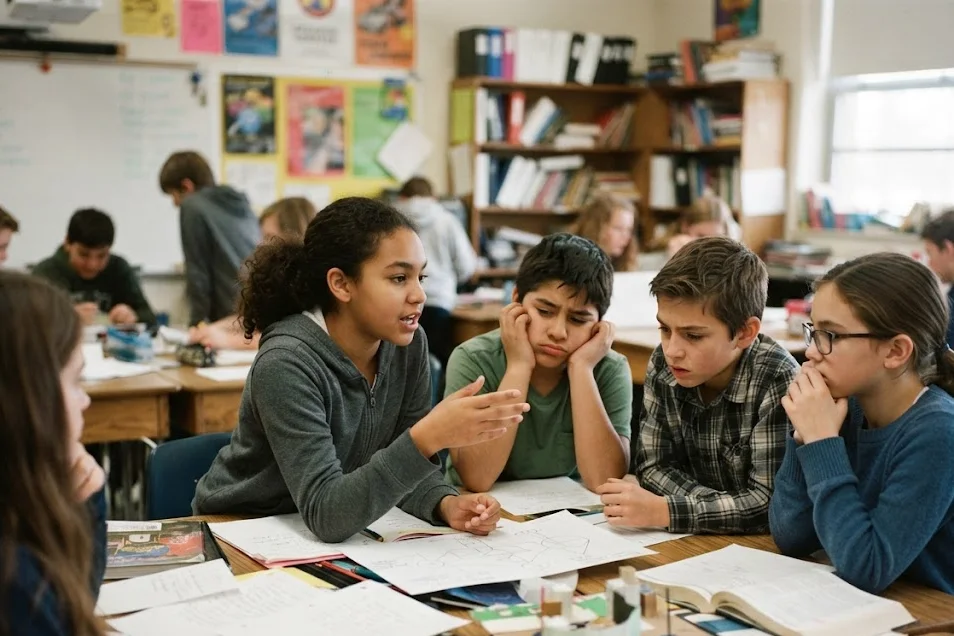 Doing It All
One Person Takes Over
- They don't trust others to do their part.
- Sharing the work feels slower than doing it alone.
- Teammates stop contributing and the group splits.
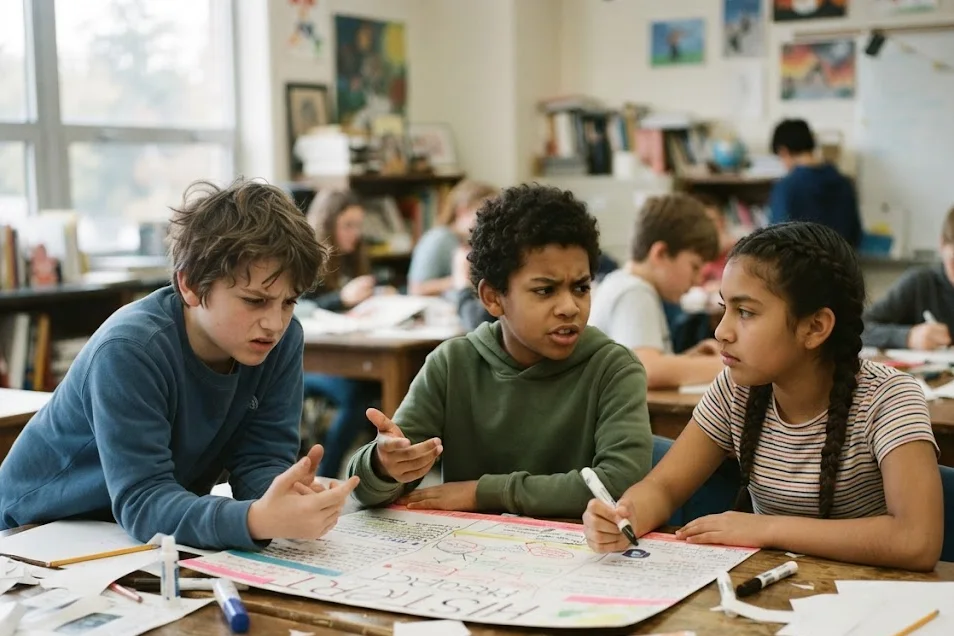 Disagreements
Arguments Derail the Group
- Small disagreements turn into stalled projects.
- Feedback feels like criticism.
- No one knows how to get the group moving again.
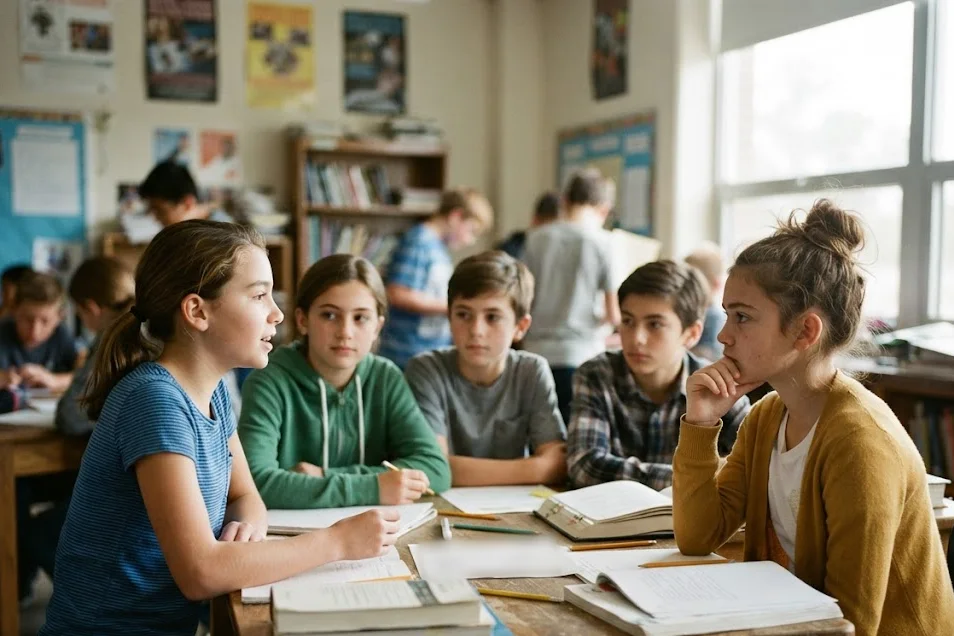 Going Along
Ideas Stay Unspoken
- Quieter children agree just to avoid friction.
- Good ideas never reach the group.
- Roles are unclear, so some children drift.
Teamwork isn't just getting along. It's a set of skills children can learn, practice, and strengthen with every group they join.
Why Teamwork Matters More as They Grow
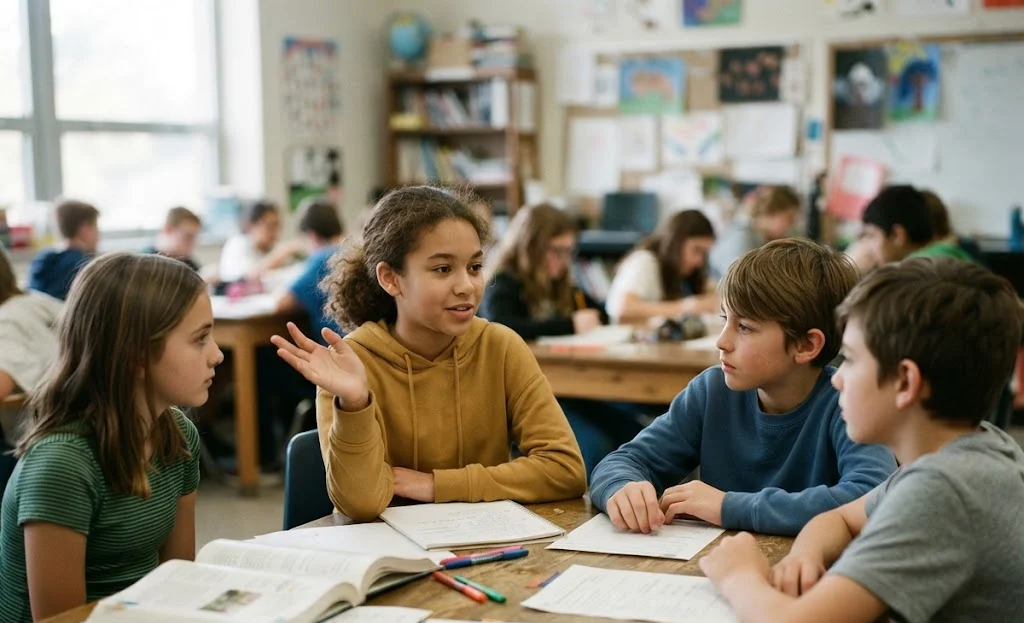
As children move through school, more of their work, sports, and activities depend on people working well together.
Working Together Becomes the Norm
- Group work grows. Projects, labs, and presentations increasingly depend on everyone doing their part.
- Teams get more complex. Sports, clubs, and activities bring together children with different strengths and styles.
- Disagreements are normal. Handling them well keeps a team together instead of splitting it apart.
- Collaboration is a life skill. From family plans to future jobs, most goals are reached with other people.
- Teamwork isn't just being agreeable. Strong teammates speak up, listen, and hold themselves accountable.
The goal isn't a child who always goes along. It's one who knows how to contribute, listen, and help a group succeed.
What Understanding Why Teamwork Matters Helps Your Child Develop
Teamwork isn't one quality. The course breaks it into specific capabilities children can understand, practice, and strengthen over time.
Knowing Their Role
Understand how clear roles reduce confusion, and own their part in the team.
Solving Problems Together
Combine different perspectives and skills to solve problems better than anyone could alone.
Following Through on Milestones
Set shared goals, track progress, and keep their commitments to the team.
Listening as Well as Speaking
Share ideas clearly and listen closely so everyone's voice is heard.
Adapting and Supporting Teammates
Adjust when plans change and step in to support others when needed.
Each capability supports the others: clear roles, good listening, and follow-through help children become teammates others can count on.
Inside the Course — Four Modules, From Meeting the Team to Planning Together
The course starts with how teams work, builds problem-solving and conflict skills, develops trust and shared goals, and ends with planning a project together.
- 01
Meeting Your Dream Team
The basics of how teams work.
- Understand how clear objectives and individual strengths make teams work.
- Learn why defined roles and responsibilities matter.
- Practice active listening and sharing ideas clearly.
- See how adaptability and support help teams through setbacks.
- 02
Power of Teamwork
Solving problems and handling conflict together.
- Use problem-solving and brainstorming techniques as a team.
- Welcome diverse perspectives to find more creative ideas.
- Recognize common team conflicts and resolve them constructively.
- Give and receive feedback that helps the team grow.
- 03
Team Selection
Trust, shared vision, and the right roles.
- Understand why trust and camaraderie hold teams together.
- Create a shared mission and vision for a team.
- Assign roles and set goals based on each person's strengths.
- Align personal goals with the team's goals.
- 04
Collaborative Planning
Turning ideas into a shared project plan.
- Generate and organize project ideas as a team.
- Divide projects into manageable tasks.
- Create timelines with milestones that keep everyone accountable.
- Reflect on how teamwork supports their own growth.
Course structure
- 4Modules
- 28Instructional Lessons
- 8Practice Activities
 Course badgeAria Kirin — The Bridger
Together, the modules move children from understanding how teams work to planning a project with others.
From Learning to Real Life — How Your Child Practices Teamwork
Knowing how teams should work is easier than staying patient when a project stalls. Teamwork grows through practice, reflection, and real groups.
 01Learn
Understand How Teams Work
- Watch short animated lessons that follow a team on a quest.
- See characters assign roles, brainstorm, and work through conflict.
- Discover tools for feedback, trust, and project planning.
 02Practice & Reflect
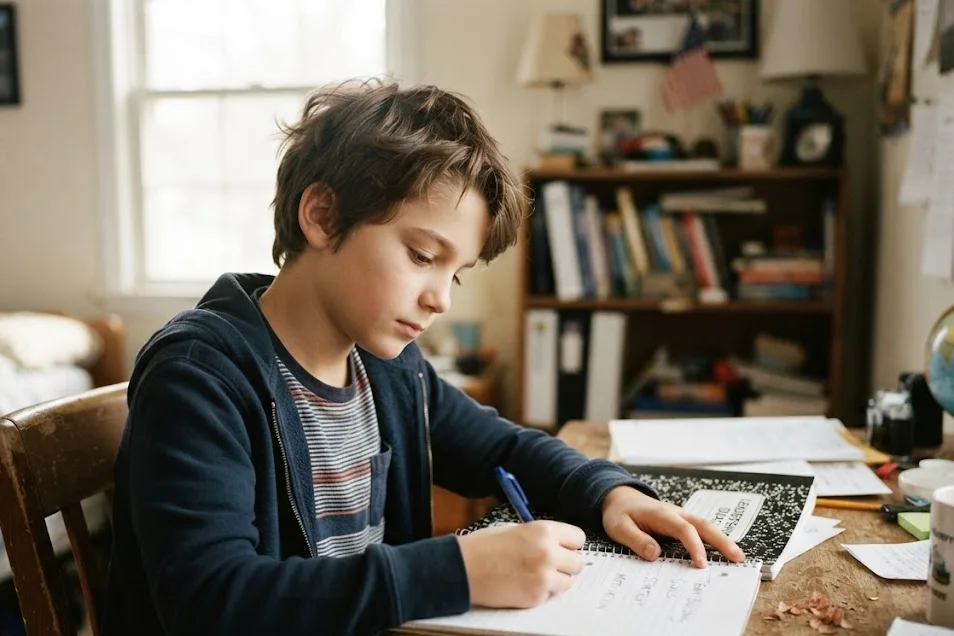
Think Through Team Situations
- Work through scenario-based Try Its where available.
- Decide how a team should split up a task.
- Reflect on their own teamwork in module exercises.
 03Apply
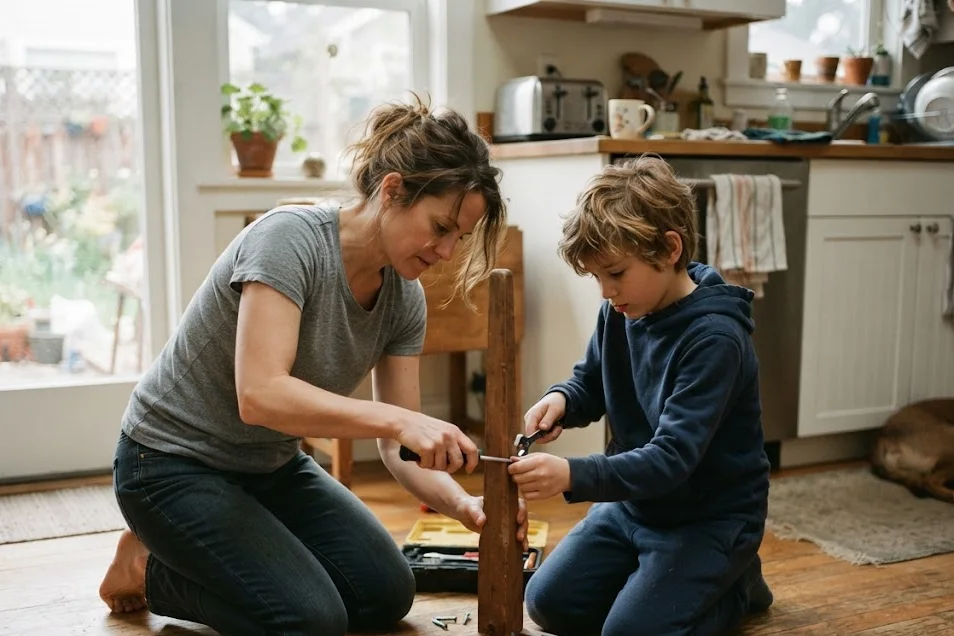
Work Together Beyond the Screen
- Take on one clear role in a group project.
- Ask a quieter teammate for their idea.
- Plan a family project with tasks and a timeline.
- Talk with a parent about a team that worked well.
Success isn't a perfect team. It's being a teammate who listens, contributes, and follows through.
What Research Tells Us About Cooperation, Collaboration & Teams
Researchers have studied how cooperation affects learning and why teamwork matters beyond school. These findings describe general patterns, not predictions for any individual child.
- Learning Together
Cooperation supports learning and friendships.
- A review pooled 148 studies of early adolescents.
- Cooperative goals were linked to higher achievement and better peer relationships than competitive or individual goals.
- These are averages across many classrooms.
- A Skill of Its Own
Collaboration can be measured.
- In 2015, PISA tested collaborative problem-solving among 15-year-olds in dozens of countries.
- Scores varied widely, and girls outperformed boys in every participating country and economy.
- The test used computer-simulated teammates.
- Valued at Work
Employers look for teamwork.
- A 2024 survey asked employers what they want to see on new graduates' resumes.
- Nearly 80% wanted evidence of strong teamwork skills.
- 237 employers responded to the survey.
The evidence points to cooperation: children learn and connect better when they work toward shared goals. Understanding Why Teamwork Matters is built around that approach, without promising guaranteed results.
How Understanding Why Teamwork Matters Supports Two Learning Journeys
The course appears in two programs. In each, it arrives at a different point and builds on different courses that came before it.
Why It Belongs in Both
- In Leadership Development, it completes the journey. After Conflict Resolution Foundations, children bring leadership, trust, and repair skills together on a team.
- In Leadership Development, it puts leadership to work. Teamwork shows children how leading, listening, and following fit together in real groups.
- In Habits, it follows careful thinking. After MindCraft: Developing Analytical Skills, children apply clear thinking to solving problems with others.
- In Habits, it leads into forgiveness. Working closely with others prepares children for Power of Forgiveness, the program's final course.
The Leadership Development ProgramCourse 7 of 7
- 1–4Four Earlier CoursesConfidence · Communication · Leadership · Relationships
- 5Making Responsible ChoicesEthics & Accountability
- 6Conflict Resolution FoundationsConstructive Conflict & Repair
- 7This CourseUnderstanding Why Teamwork MattersCollaboration & Shared Success
The Habits ProgramCourse 6 of 7
- 1–4Four Earlier CoursesFocus · Self-Control · Curiosity · Discipline
- 5MindCraft: Developing Analytical SkillsAnalytical Thinking
- 6This CourseUnderstanding Why Teamwork MattersCollaboration
- 7Power of ForgivenessForgiveness & Emotional Recovery
In either program, the course isn't a standalone fix. It's one step in a longer sequence that gives teamwork time to develop.
Frequently Asked Questions About Understanding Why Teamwork Matters
Practical answers about what your child will learn, what the course asks of your family, and how it fits into Bloomster's programs.
Who is Understanding Why Teamwork Matters designed for?
It uses everyday situations relevant to children roughly 9 to 14. It is the final course in the Leadership Development Program, which works for children from 9 to 14, and the sixth in the Habits Program, designed around ages 10–12. What your child is experiencing matters more than an exact age.
What will my child learn in this course?
Children learn how roles, goals, and communication make teams work. They practice brainstorming, problem-solving, resolving team conflicts, giving feedback, building trust, assigning tasks by strength, and planning projects with timelines and milestones.
My child prefers to work alone. Is this course right for them?
Yes. The course doesn't ask children to change who they are. It shows how clear roles and shared goals let every person contribute in their own way, which often makes group work feel less frustrating for independent children.
How long does the course take?
Your child moves at their own pace. The four modules contain 28 short animated lessons, 8 practice activities, and a module exercise at the end of each. Inside a program, courses are spaced across roughly a year, which gives this one several weeks to settle into daily life.
How much time should my child spend on it each week?
We suggest two 30-minute learning sessions each week. Group projects, team sports, and family tasks between sessions give your child real chances to practice. If a week gets missed, simply pick up again.
Do I need to be involved as a parent?
You don't need to teach the course. Protect the learning time, notice what your child is working on, and invite them to plan a family project with you, from dividing tasks to setting a deadline. Bloom, the parent side of Bloomster, helps you follow along.
My child's group projects often end in arguments. Will this help?
It can. Module 2 covers common team conflicts, constructive feedback, and conflict resolution skills, so children learn to work through disagreements before they derail a project.
Does the course cover how to divide up work fairly?
Yes. Modules 3 and 4 focus on setting roles and goals, matching tasks to each person's strengths, and creating timelines so everyone knows their part.
Can I enroll my child in this course by itself?
Bloomster is organized around learning journeys rather than single-course purchases. Understanding Why Teamwork Matters is part of the Leadership Development and Habits programs, and it may also be recommended within a Personalized Course Journey. Finding your start shows where your child might begin.
How will I know whether my child is making progress?
Look for small signs: taking on a clear role, asking teammates for their ideas, handling a disagreement calmly, or following through on their part of a project. Progress is rarely a straight line.
Explore the Leadership Development and Habits Programs — See the Bigger Journey
Teamwork is one capability among many. Both programs connect it with leadership, communication, careful thinking, and repairing relationships.

Teamwork Grows Alongside Other Skills
- This course builds roles, listening, trust, and shared planning.
- Earlier courses develop the communication, leadership, and conflict skills teamwork draws on.
- In the Habits Program, the next course applies those relationships to forgiveness.
- Steady practice across months gives these capabilities time to connect in everyday life.
Teamwork isn't about always agreeing. It's about your child helping a group do something no one could do alone.