What Your Tween Is Managing Between Drop-Off and Pickup — And Why It's More Than You Think
TL;DR:
The child who falls apart at 3:40 spent seven hours holding it together. The collapse at home isn't a problem with your house — it's the bill coming due for a day you didn't get to see, and there's a twenty-minute window where what you do matters more than anything else you'll do all afternoon.
She Held It Together for Seven Hours. Then She Walked In.
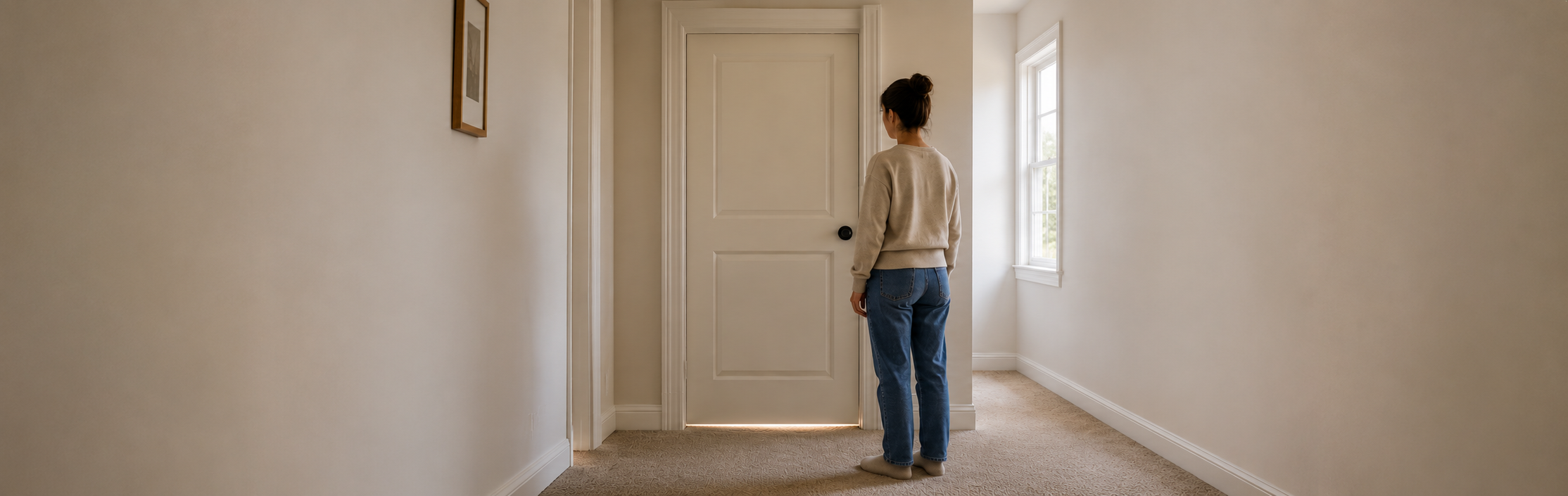
3:40. The backpack hits the floor by the door — not set down, dropped.
You ask how the day was. You get fine. You ask one more small thing — something about a permission slip — and the whole afternoon turns.
And you're standing there thinking: her teacher says she's lovely. Her friends' parents say she's easy. So why is this the room where it comes apart?
It comes apart here because this is the only place it can.
What's Actually Happening
Research consistently shows that holding a feeling steady takes real, measurable effort — and that effort runs down over a day the way a battery does.
Your tween spent seven hours doing it without a break. Sitting still when she wanted to move. Keeping her face neutral when a comment landed badly. Reading a lunch table. Managing a tone she couldn't ask about. None of it dramatic. All of it costly. None of it visible to you.
By 3:40 there's nothing left in the account. Then the door opens, and the one place she doesn't have to perform is standing in front of her holding a permission slip.
This isn't your house failing. It's your house being the safe one. The child who comes apart at home is the child who managed to hold it everywhere else — and the holding is the skill. The collapse is just what it cost.
Where Your Influence Actually Is
Most parents spend that first twenty minutes asking. It's the most natural instinct there is, and it's the one thing that reliably makes it worse — because every question is a small demand for composure from a child who has none left.
Your influence is in lowering the demand, not in gathering the information.
At the door, say nothing that requires an answer. Try: "Hey. There's food." That's the entire script. It sounds like too little. It is doing more than any question you could ask.
Then wait twenty minutes. Food out, no eye contact required, no agenda. Let the tank come back up before you ask it for anything.
After the window, ask one specific thing — never the general one. How was your day? asks her to summarize seven hours she has no words for. Try instead: "What was the loudest part of today?" Small, specific, answerable in one line. She can hand you one thing without having to hand you everything.
Bloomster's FearLESS: Building Brave Young Hearts works the same day from her side — what's happening in her body when something at school lands hard, and what she can do with it while she's still sitting there.
Try This Before Next Monday
Pick one afternoon and change only the first twenty minutes.
No questions at the door. Food on the counter. You nearby, doing something else.
Then ask your one specific question, and take whatever comes back — including a shrug.
You're not fishing for information tonight. You're teaching her that walking through that door costs her nothing. That's what eventually makes her tell you something.
The falling apart at 3:40 was never the problem. It was the receipt for a day you didn't get to see. 💛
If you'd like something to work through together this week, our free Fear Management discussion guide walks a parent and tween through five real scenarios — including the one about the thing they keep quietly steering around. No account needed.
Coming up next week: Not every hard day at school is the same kind of hard. There are three distinct ones; they hit for different reasons — and your response only helps if it matches the right one.